Analysis
Who Started the September 1965 War?
The historical timeline of 1965 events like Operation Desert Hawk, Gibraltar and Grand Slam prior to all-out war on 6th September needs to be studied again.
Sqn Ldr (R) Ali HamzaFormer Military Aviator06 Sept 20266 min read

Today is 6 September and everyone in talking about either the Indo-Pak war of 1965 or the more enlightened and intellectual topic of how history is distorted by hiding Operations Gibraltar and Grand Slam. One of the best books about this phenomenon is The Murder of History: A Critique of History Textbooks Used in Pakistan by Khursheed Kamal Aziz or KK Aziz. Written in 1985, it discusses the various errors, misquotations, misinterpretations and misleading statements found in various curriculum textbooks taught in Pakistan. Though one can argue that the current first world countries are better than our third world country in every way and yet they also do not teach in schools about the atrocities of Churchill (e.g. Bengal Famine), King Leopold’s in Congo, millions of enslaved or killed Africans, native Americans, Aborigines etc.
So let me put on my hat of IR scholar instead of a fighter pilot and talk about the events of 1965 before 6th September, instead of the well-known great air battles of PAF and world-famous heroes like MM Alam, Sarfraz Rafiqui, Sajad Haider, Saif ul Azam and so on. The smaller PAF has always thrashed the far bigger IAF in every encounter by the grace of Almighty and professionalism of its pilots and great leaders like the legendary Asghar Khan and Nur Khan. That legacy of PAF continues till today and is clear in the Balakot Strike of 2019 and ensuing retaliation in form of Op Swift Retort, or the Modi’s Bollywood style botched Op Sindoor in 2025 and Pakistan’s Bunyan um Marsoos. But for now, let’s keep these praises to a side and start at the beginning.
Well before the independence of two newly formed states, namely Pakistan and India (or Hindustan or Bharat), the British settled the division of assets between the two. However, by colluding with our masters, Indians did not honour that agreement and usurped the possessions of the smaller neighbour, not to mention the multiple other problems like invasion of Kashmir and supervision of the refugees. The expectation was that Pakistan is crippled and cannot survive against the bullying of a bigger adversary. This animosity sow the seeds of many future conflicts between the two now nuclear states. PAF shot down an IAF Canberra on reconnaissance mission over Rawalpindi on Eid day, 10 April 1959.
In early 1965, Indian troops entered the Pakistani side of Rann of Kutch beyond the disputed area and built some military posts. This was unprovoked aggression and the only reason can be to recover some prestige after the humiliation at he hands of Chinse in 1962 war. Pakistan Army had no problem in ejecting the intruders and the posts were captured in April 1965 after a successful operation code named Desert Hawk. An IAF Dassault Ouragan fighter surrendered on June 24, 1965, and the quarrel was taken to our ex-masters who had plenty of old records and the hope was that they would be neutral and fair in arbitration. They awarded some small part to Pakistan but drew by far the larger part of boundary in accordance with India’s desires. However, India took the failure of their aggression in Kutch as serious humiliation and announced, India will respond at a time and place of her own choosing.
As per the U.S. declassified documents, Indians started crossing the Ceasefire Line (CFL) in May and then in July 1965, captured some Pakistani posts on the edge of Azad Kashmir. India publicized it as re-occupation of their own territory in disputed area of Kashmir and Pakistan decided to launch the fateful Op Gibraltar in August to spark a rebellion in Indian Occupied Kashmir. This was never to be and the strategic mistake here was the belief that India will not cross international border and it will be a localized skirmish only around the UN-mediated CFL. The Indians captured Haji Pir Pass in a surprise attack in late August and now the scene was set for Op Grand Slam and some more slips at the top level of decision making.
It was a surprise offensive to capture the jugular of Indian Army in IOK, Akhnoor. After the initial success against a well dig enemy, the change of command and delay of 24 hours was the turning point in favour of India. On 1st September, Sqn Ldr Sarfraz Rafiqui and Flt Lt Imtiaz Bhatti opened the account by decimating IAF Vampires in a 2 vs 4 battle. The Indian army soldiers must have cheered even more than Pakistani soldiers because the Vampires had been providing close support to their army in Chamb area, only to find out that the tanks and vehicles destroyed by them were friendlies and did not belong to Pakistan. The IAF morale was shattered, and they decided to use 8 aircraft next time to shoot down 1 F-86 Sabre as a revenge. The Indian website Bharat Rakshak tells the details of a mission where Mystere were used as bait and Gnats were to shoot down PAF interceptors in a sneak attack. All credit to IAF for executing such a plan, but Flt Lt Yusuf was more than a match for them, who landed his damaged Sabre back and shot down a Gnat later in war. Hence, IAF failed in taking revenge and it all went downhill for them after that, starting from surrendering a serviceable Gnat by Sqn Ldr Brijpal in that very mission.
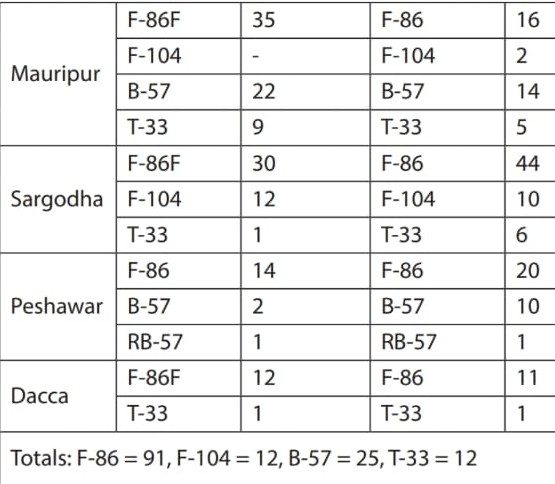
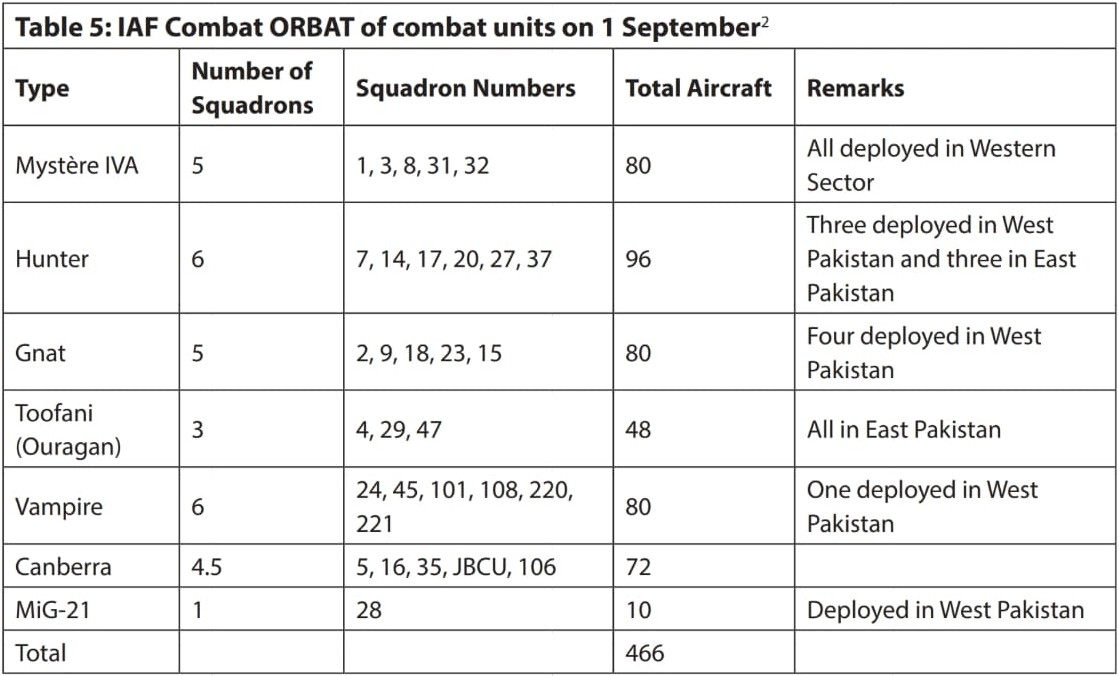
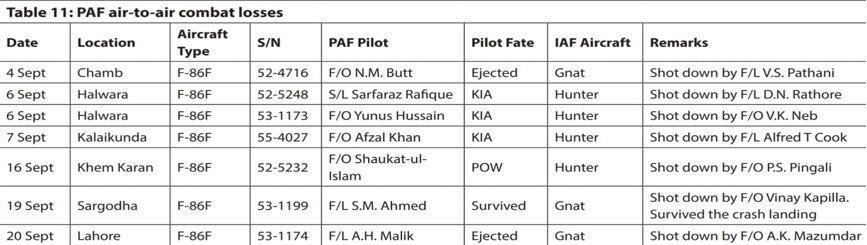
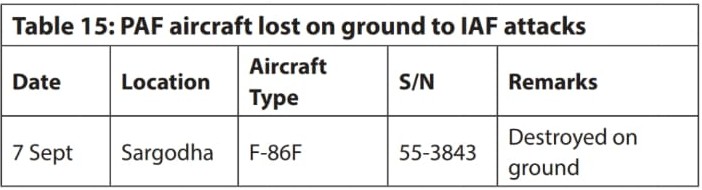
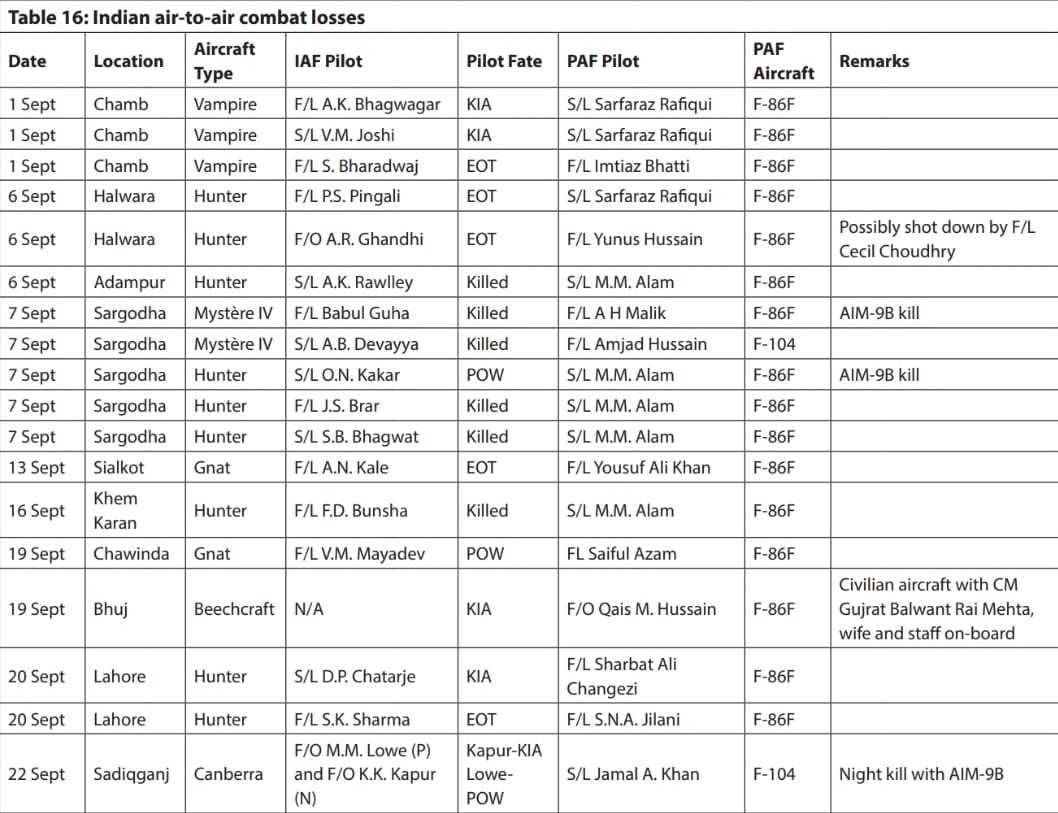
The all-out war started on the morning of 6th September when Indian crossed international border to attack Lahore. I will encourage the readers to read articles and books provided at the end where both the errors as well as bravery of Pakistani government and armed forces is discussed. From the running away of CO and GOC of attacking Indian army force at Lahore to the only ace in South Asia, namely MM Alam, 65 war is full of fascinating stories. The strikes at IAF bases of Pathankot and Kalaikunda and dogfights like a real life TopGun Maverick are not a myth. However, in my humble opinion, it is the duty of every adult person to read about the actual events and then make up their own minds instead of lazily believing the propaganda of the enemy or even their own side. I will keep the details of the battles for some other time but will leave the readers with some interesting facts from the book Eagles of Destiny by the meticulous authors Usman Shabbir and Yawar Ahsan. Leaving the rest to the better judgment of my audience, I just want to conclude that the historical timeline shows that the initial aggressor was India, contrary to the belief of South Asian intelligentsia.

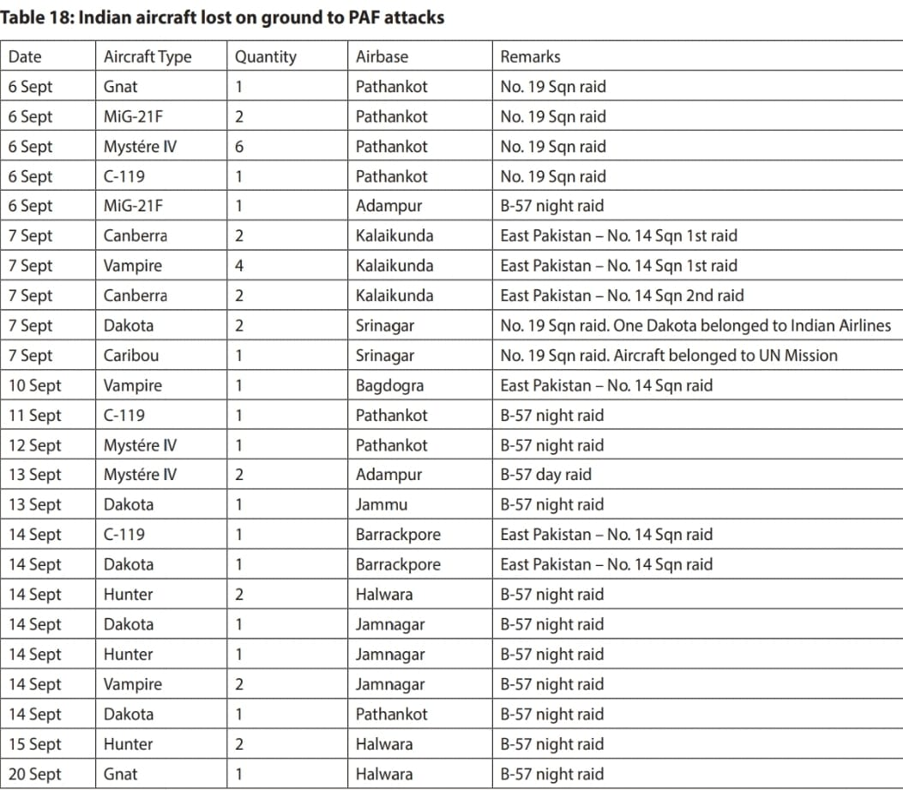
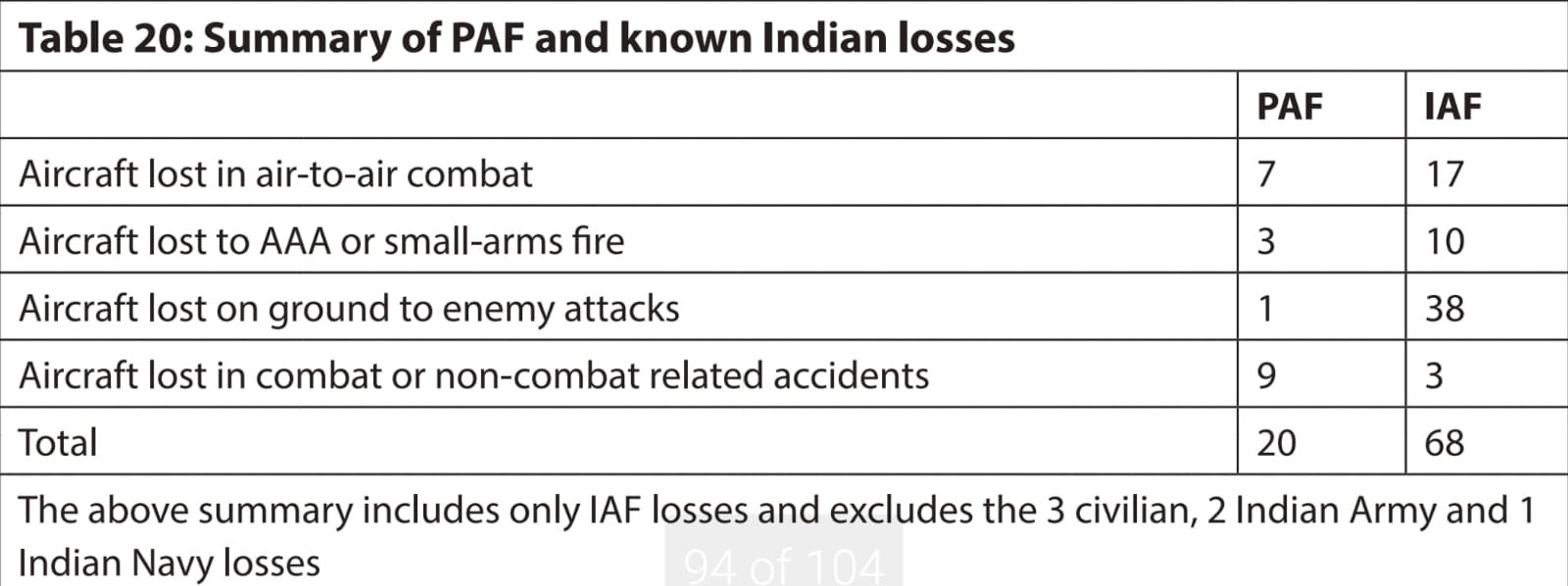
Recommended Reading List
Straight shooting on the 1965 war by Air Cdre (R) Sajad Haider https://www.dawn.com/news/1204925
Nur Khan reminisces ’65 war https://www.dawn.com/news/155474/nur-khan-reminisces-65-war
Eagles of Destiny: History of the Royal Pakistan Air Force and Pakistan Air Force, 1947-1971 by Usman Shabbir and Yawar Ahsan
Battle for Pakistan: The Air War of 1965 by John Fricker
Fiza'ya: Psyche of the Pakistan Air Force by Pushpindar Singh Chopra and Ravi Rikhye
Great Air Battles of Pakistan Air Force by Air Cdre M Kaiser Tufail
Flight of the Falcon: Demolishing Myths of Indo-Pak wars 1965 & 1971 – Story of a Fighter Pilot by S Sajad Haider
The Gold Bird: Pakistan and Its Air Force, Observations of a Pilot by Mansoor Shah
Cutting Edge PAF by ACM (R) M Anwar Shamim
Air Warfare in the Missile Age by Lon O. Nordeen,Jr.

Former Military Aviator
Sqn Ldr (R) Ali Hamza
Editor-in-chief
Ali Hamza served in PAF for 20 years as a fighter and Instructor pilot, with a stint on helicopters. Choosing academia over commercial flying, he did his double masters in International Relations and Defence & Strategic Studies. Currently an MPhil IR scholar and CEO of AeronautIR Solutions, his research interest lies in espousing aerospace with geopolitics.