Analysis
Will Pakistan buy a fifth generation fighter and WHEN ?
Pakistan will not get an F-35, and the KAAN is not yet an aircraft it can buy. The fifth-generation fighter, when it comes, will be a Chinese J-35A, bought the way Pakistan buys: after India moves, and on Chinese credit.
Ahsen NiazFormer Fighter Pilot06 Oct 20268 min read
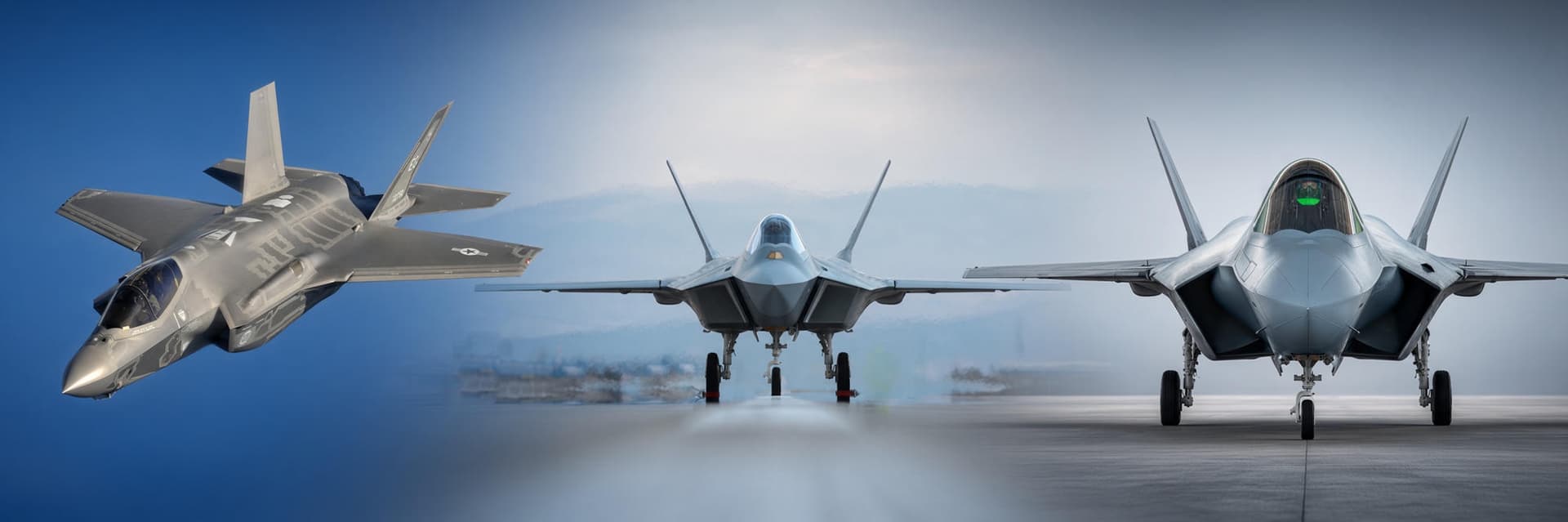
The border between India and Pakistan is one of the most dangerous flashpoints in the world, and that is saying something given the sheer number of conflicts underway across the globe. Yet this flashpoint is unlike any other. The two sides are far more closely matched in capability than most rivals; each can inflict serious damage on the other even before the nuclear dimension enters the picture; and, most importantly, they share a long, contested border. All of this makes the arms race on the subcontinent one of the most intense and closely watched anywhere. World leaders, diplomats, the media, and major defence contractors all follow it closely. Every new crisis and skirmish triggers fresh acquisitions and accelerates the race, and after the latest round of hostilities, one question has captured the imagination of many: will this rivalry now enter the fifth generation? Will Pakistan acquire a fifth-generation fighter, and if so, which one?
Practically, Pakistan has three options:
Lockheed Martin F-35 Lightning II
Shenyang J-35A
TAI KAAN
Out of all the questions facing us today regarding this acquisition, this one is the easiest to answer. The first option for now, looks out of the question and the reasons are very simple. Historically, the US was one of the major arms suppliers to Pakistan but that was due to a multitude of events aligning to work in Pakistan's favor. The F-16 collaboration which has been a backbone of PAF for decades started because of the Cold war and close collaboration between the US and Pakistan against the Soviet Union. The second F-16 transfer happened in the wake of the 9/11 terror attack and the war on terror that ensued. However, as the US started to move on from the war and the interests of the two countries diverged, the defense relationship between the two countries took a backseat too.
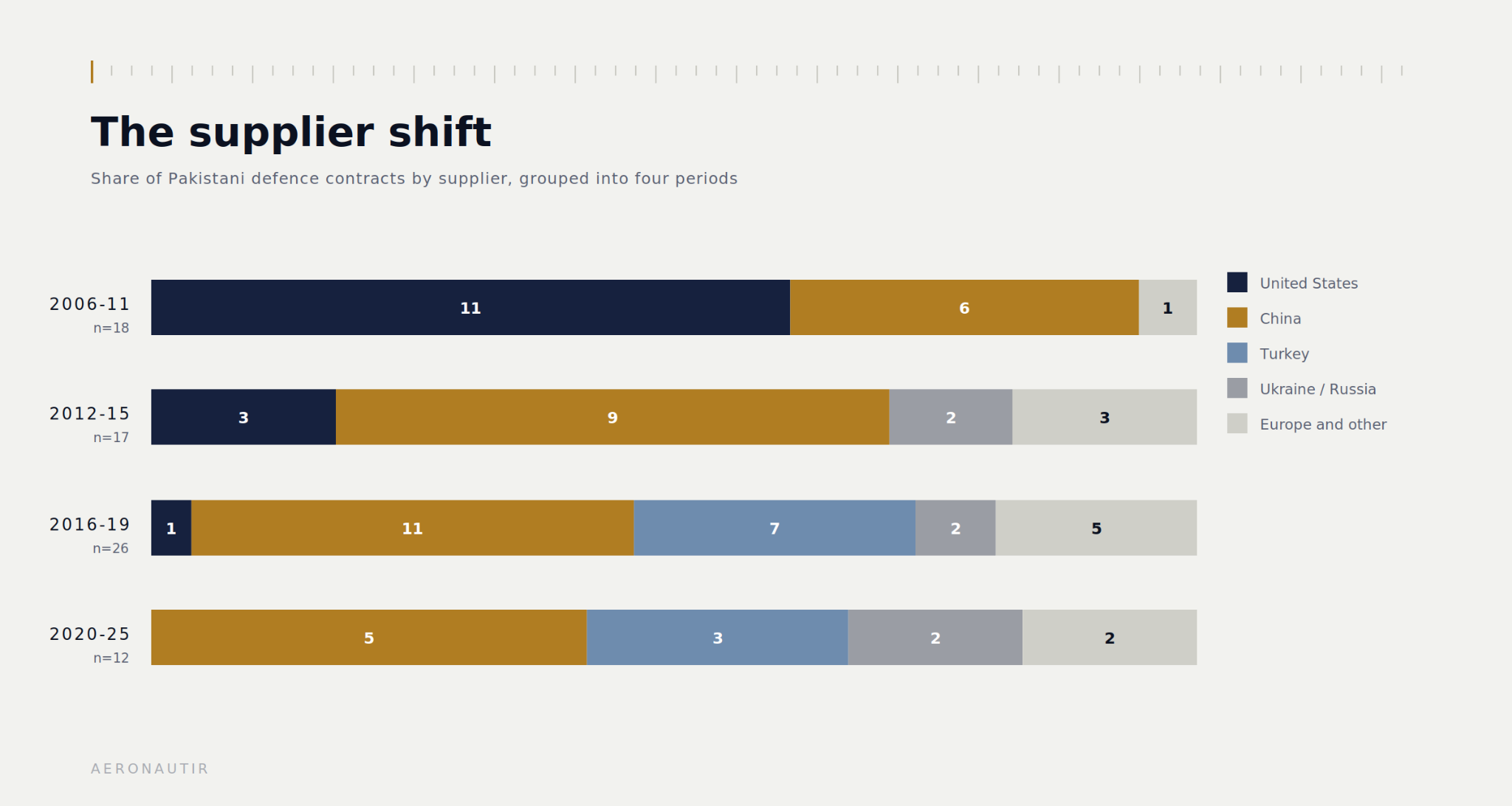
(Source : AERONAUTIR defence acquisition)
The graph above shows the shift in that relationship between the US and Pakistan. While the US has continued to support Pakistan's existing inventory, it has shown little interest in new sales . The divergence widened sharply as the US withdrawal from Afghanistan approached, and there has been no major new defence cooperation between the two countries for at least a decade.
The graph also points to another shift: Turkey has filled a significant portion of the void left by the US. This brings us to the next option, the TAI KAAN, a twin-engine fifth-generation fighter being developed by Turkish Aerospace Industries. Turkey's aerospace industry has grown considerably over the past two decades, and some would say it has matured. Pakistan's turn towards Turkey for defence acquisitions is a testament to that. However, most of these acquisitions fall outside the realm of manned aircraft, as the data below makes clear:
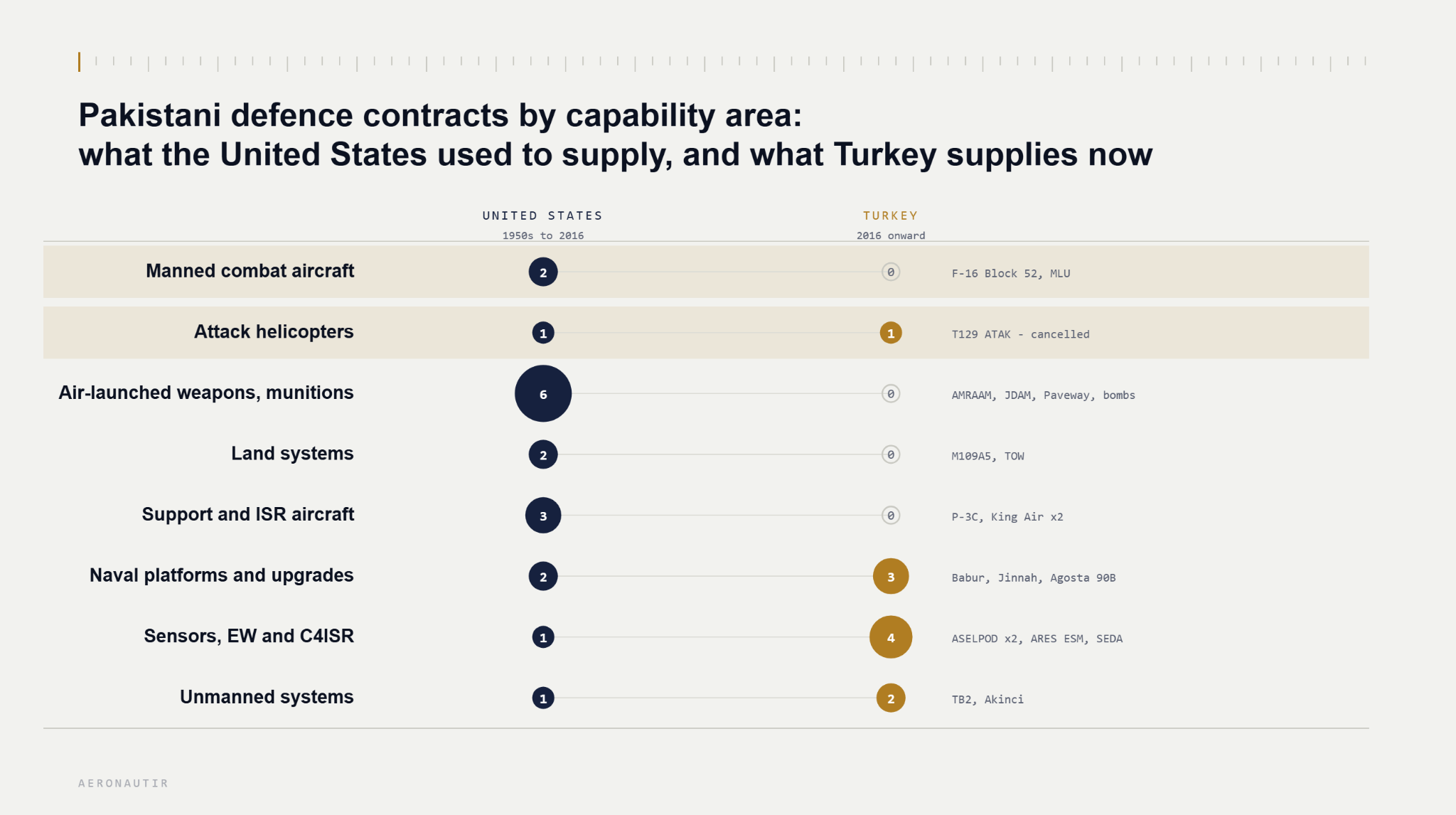
(Source : AERONAUTIR defence acquisition)
This graph shows where Turkey has been able to fill the gap and where it hasn't. Turkey's main contributions to Pakistan have been in sensors, electronic warfare (EW), C4ISR and unmanned systems. In the areas where the US was dominant, such as manned combat aircraft, air-launched weapons and munitions, land systems, and support and ISR aircraft, Turkey has not been able to make inroads. The closest the two countries came to a deal of that kind was the T129 ATAK helicopter, but the contract collapsed when the US never granted a re-export licence for its LHTEC CTS800 engine.
The T129 episode is a significant piece of the puzzle, because its lessons apply directly to KAAN. The KAAN prototypes currently fly with the General Electric F110 engine, while Turkey develops its own TEI TF35000, the target for full integration is 2032. That target is ambitious. Building a jet engine with the thrust and performance Turkey is aiming for is a herculean task in itself, especially for a country that has never produced an engine in this class. Some delays should be expected. And even once integration is complete, exporting the aircraft to Pakistan will be another hurdle: as long as the KAAN relies on an American engine, Washington effectively holds a veto over its sale.
Pakistan, despite its limited options, spends its money carefully. In 2010, for example, it evaluated the J-10 and concluded it was not yet comfortable with the aircraft's capabilities, deciding to revisit it later, which it eventually did. Pakistan gets one shot at a fifth-generation aircraft, and it needs to make that shot count.
Which brings us to our last option, the Shenyang J-35A. The J-35 also falls into the category of the fifth generation fighters but it holds a significant advantage over the KAAN in several respects .
The first advantage is that the J-35’s respective versions have already been inducted into the PLA Navy and PLAAF. Hence, they are systems that have already matured and will be more so by the time Pakistan gets them.
The second advantage is integration, Chinese systems are already embedded in Pakistan's aerospace industry, and the two countries have cooperated closely on programmes such as the JF-17 joint venture, now three decades old, the LY-80 and HQ-9 air defence systems, and the J-10 acquisition, to name a few. This gives Pakistan the shortest path to fitting a new fifth-generation platform into its "system of systems" approach.
The last and most significant advantage the J-35 holds is two-pronged:
The diplomatic confidence
The financing confidence
The diplomatic confidence:
J-35’s country of origin is a major reason why Pakistan would lean towards it. I would refer back to the graph of the “Supplier Shift” above. Despite the shifts in Geopolitical situations, China through the last few decades has been a constant in the Pakistan defense sector. China is the closest thing to “an all weather friend” Pakistan has if such a thing even exists in international politics and acquisition of a fifth generation aircraft is not a one time buy but would require continuous uninterrupted support in maintenance, training and upgrades over many years and Pakistan needs confidence that it will receive that support throughout the programme's lifetime as this would be the most expensive defence programme in Pakistan's history.
The financing confidence:
Of all the factors that can be taken into account while considering a fifth generation fighter the most significant is Pakistan's financing constraints. Pakistan in the recent past has relied on external financing to fund its most ambitious defense procurements. While the defense budget has grown significantly in local currency, the actual buying power has not.
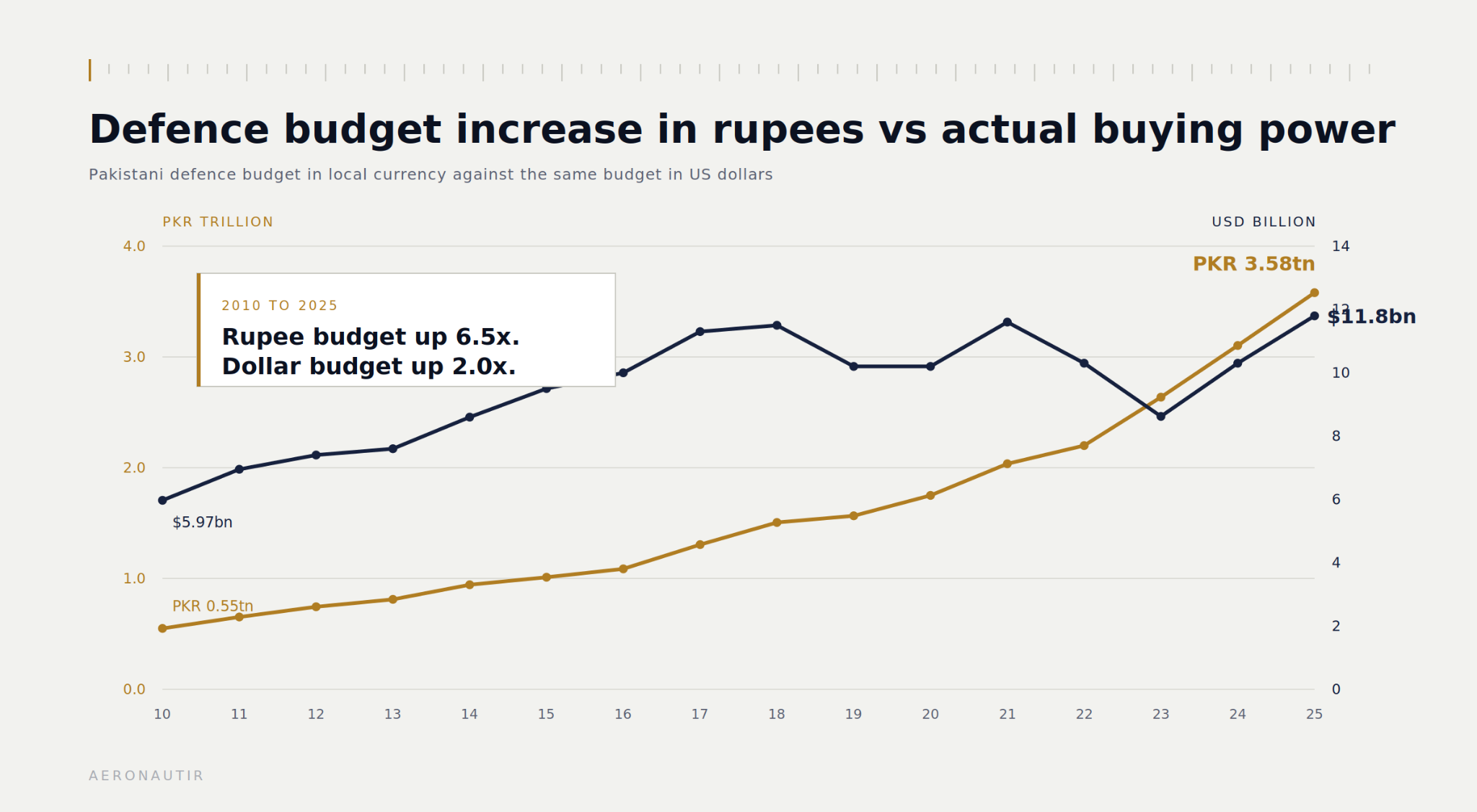
(Source : AERONAUTIR defence budgets)
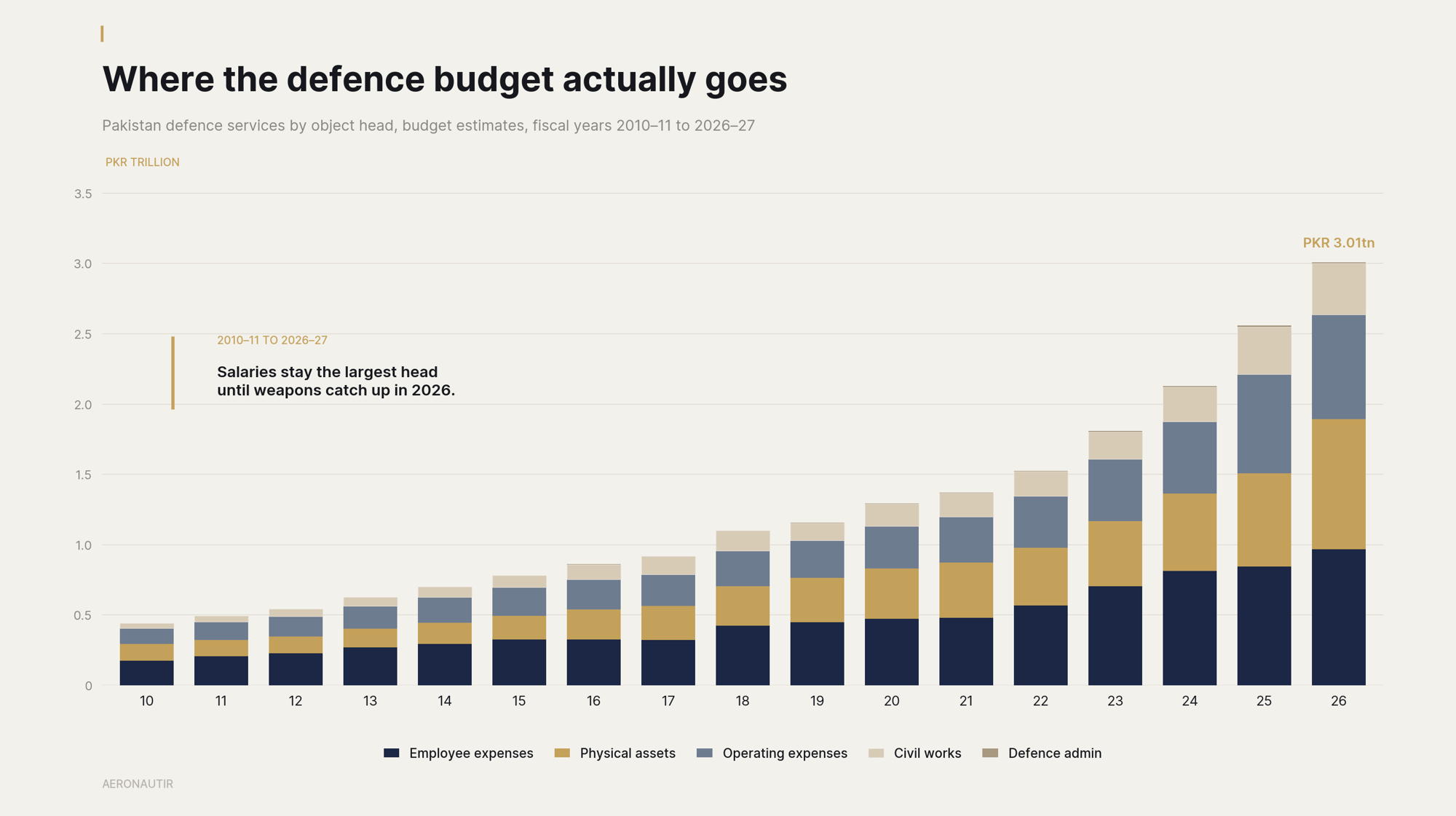
The data shows that while Pakistan's defense budget has grown significantly over the last decade, the defense purchases do not happen in local currency. Hence, where the budget in PKR has grown by a factor of 6.5 the actual buying power has grown only by a factor of 2. This budget is then broken down into four major categories:
(Source : AERONAUTIR defence budgets)
As the graph makes clear, a major portion of the defense budget goes to keeping the military up and running. The most important category in the graph however, is the “physical assets” portion. Most of the defense acquisition happens here. However, as we can see, for a military of Pakistan's size and stature this is barely enough. Pakistan often struggles to meet its military requirements solely through its defense budget and is often seen looking towards the country of export or financial institutions to meet its financing needs. Hence, financing impacts Pakistan's acquisition decisions significantly. One such glaring example came in 2017 when the PAF failed to acquire eight Lockheed Martin F-16C/D Block-52+ from the U.S when the U.S did not accept Pakistan's Foreign Military Financing (FMF) request for the purchase and PAF in turn decided to equip the JF-17 with AESL Pod for its COIN operations.
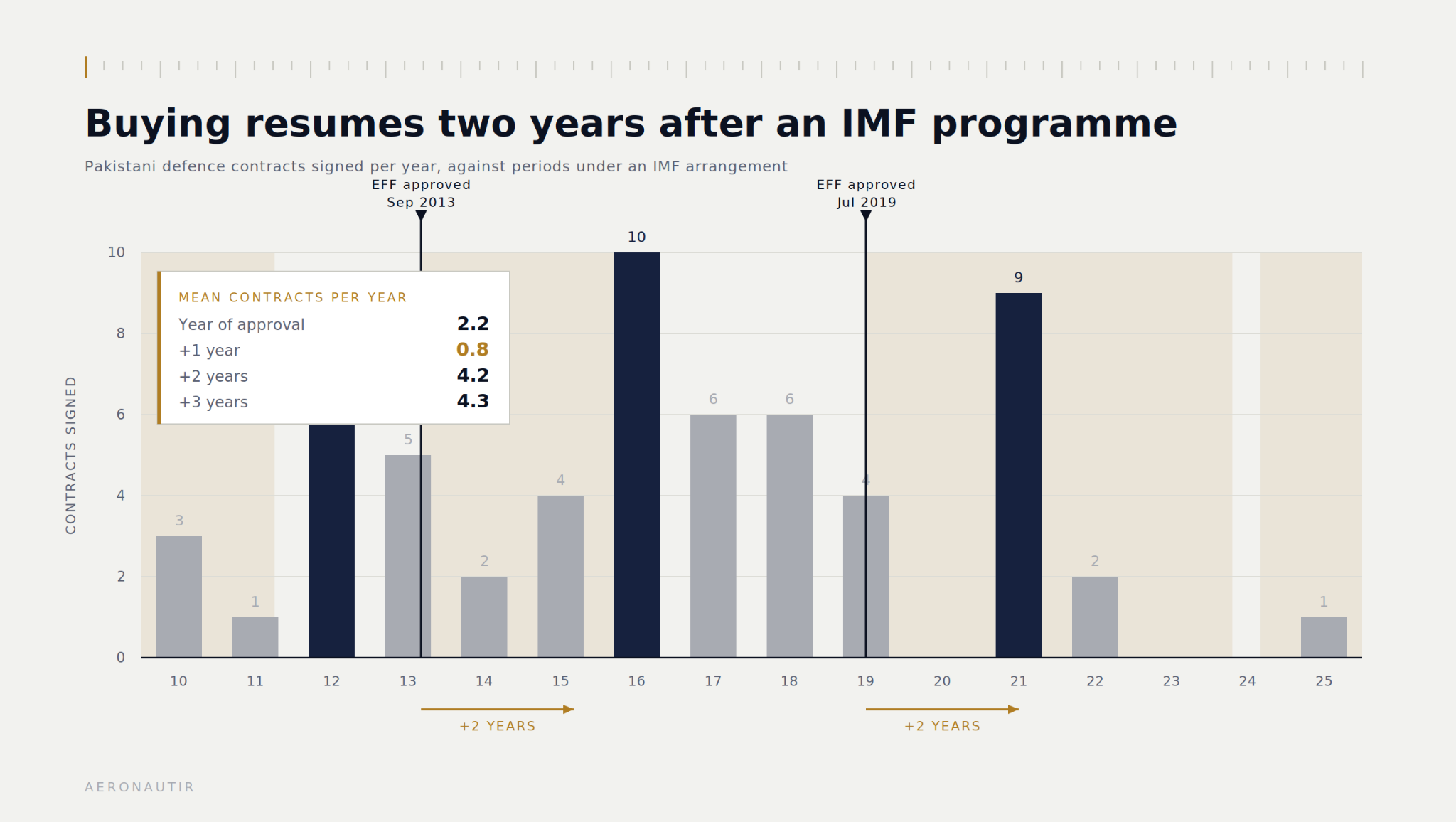
Another significant indicator of Pakistan's reliance on foreign financing for defense procurement is the relationship of its acquisition pattern with IMF programmes:
(Source : AERONAUTIR defence budgets)
The years of uncertainty where the IMF deals are being negotiated show significantly lower no of defense imports, compared to the years when the financing from those deals start flowing in but this is still not enough for a major procurement deal like a fifth generation fighter. Which brings us to the question: How does Pakistan finance a major fifth generation fighter?
In order to answer this question, let us take a look at Pakistan's most recent major fighter acquisition — J 10-C fighter. Most Pakistani media outlets missed this but more than a few Chinese outlets reported the financing deal for the J-10 fighter. According to these reports which are mostly in Mandarin (sources at the end of the article) “Chinese state-owned banks indirectly provided Pakistan with short-term loans totaling $11.48 billion , which likely included the $1.38 billion used to purchase fighter jets.” The repayment period of these loans is likely to last till 2031. This loan is being used by all three arms of Pakistan military for new purchases and even upgrades to their current fleets. Keeping in mind some major upcoming acquisitions like the remaining 16 J-10C aircraft and acquisition of more HQ-9 air defense systems which is another significant expense, it seems unlikely that Pakistan has the fiscal space to buy a fifth generation system and will definitely need another financing programme which only China can provide which brings us to our point of “The financing confidence” that Pakistan has in China for the J-35A aircraft.
The Reflex buyer
Having ruled out KAAN and the F-35 as an option for a fifth generation fighter for Pakistan and having established its financing method, we come to our final question: When will Pakistan buy the J-35A fighter?
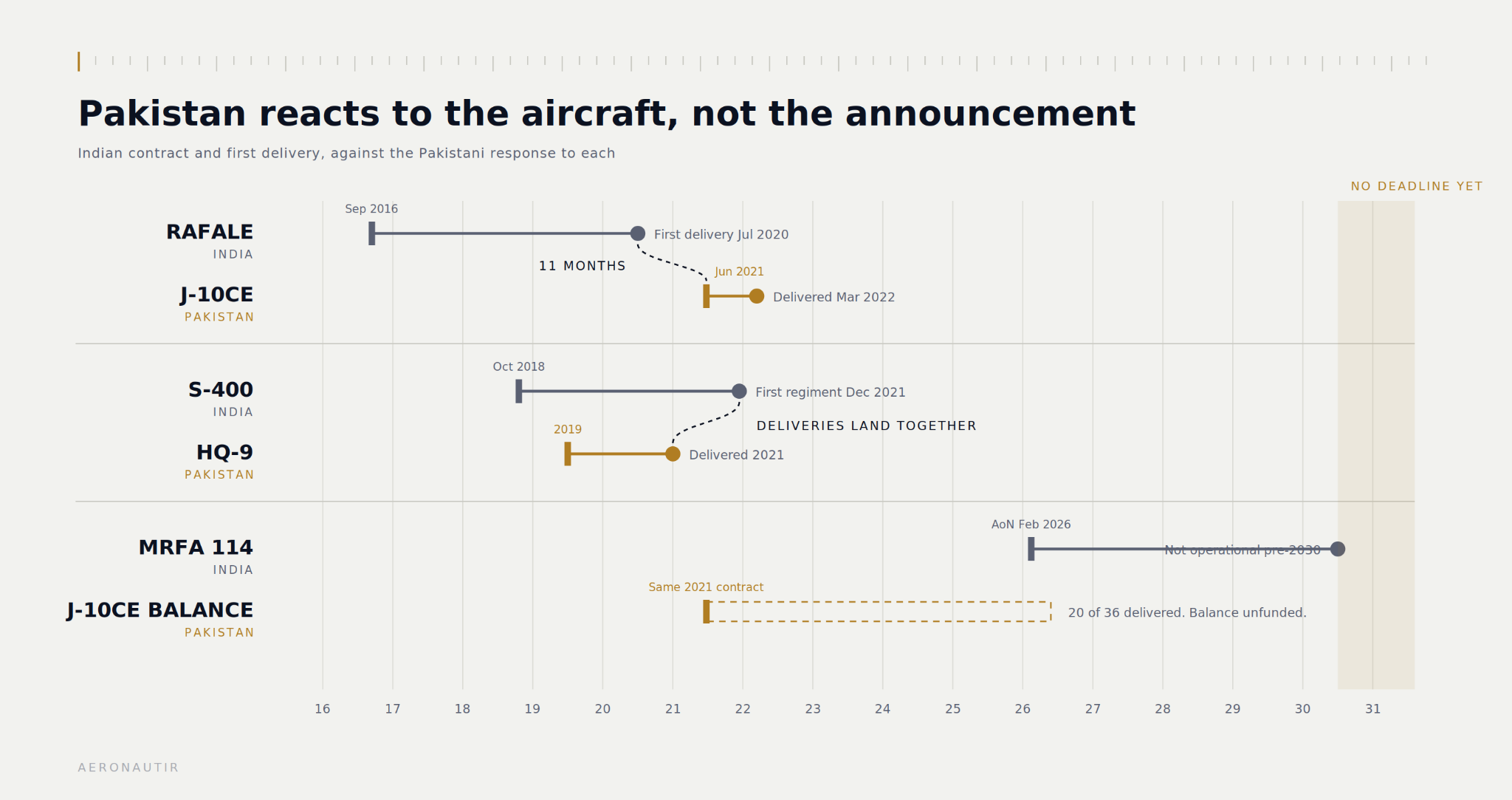
Despite the financial and geopolitical constraints, when push comes to shove, Pakistan buys, but not proactively. Pakistan is a reflex buyer when it comes to major defense acquisitions. The most glaring examples are two major buys made in response to acquisitions across the border:
. (Source : AERONAUTIR defence acquisition)
The graph shows a pattern of recent major acquisitions. Two major deals from across the border in the last decade that could impact the balance of power were the S-400 air defense system and the Rafale fighter and Pakistan responded immediately to these threats and China helped in restoring the balance of power. So Pakistan will first respond to the MRFA 114 Rafale deal by completing the current expected fleet of 36 J-10C aircraft and then acquiring more in addition to the rumored acquisition of more air defense systems from China.
Pakistan will not choose a fifth-generation fighter in the abstract. The F-35 is politically closed, and the KAAN is not yet an exportable aircraft. The J-35A is the only option that is in service, already sits inside a Chinese fleet Pakistan knows how to absorb, and can be financed by the only capital partner that has funded a buy of this size. Pakistan will place that order the way it placed the last one: after India moves, and on Chinese credit.
TLDR:
What will Pakistan buy ?
Shenyang J-35A
When will Pakistan buy?
After India Buys
Sources:

Former Fighter Pilot
Ahsen Niaz
Writer
Ahsen Niaz flew fighters in the PAF before moving into technology. He writes on airpower employment, regional security, and the gap between published capability figures and operational reality.