Analysis
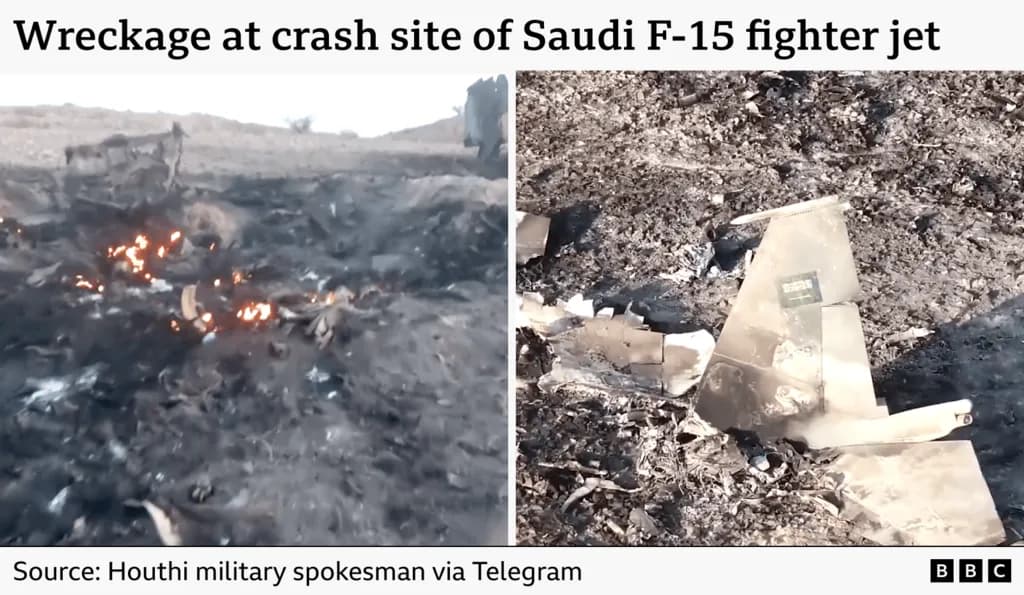
Analysis of Royal Saudi Air Force F-15SA shooting by Houthis in Marib, Yemen
The Advanced Eagle was shot down by IR missile and the technical analysis points to systems like Barq 1/2. The silent interception is a serious threat against modern fighter aircraft that are optimised for radar based missiles and Electronic Warfare.
Sqn Ldr (R) Ali HamzaFormer Military Aviator21 Sept 20263 min read
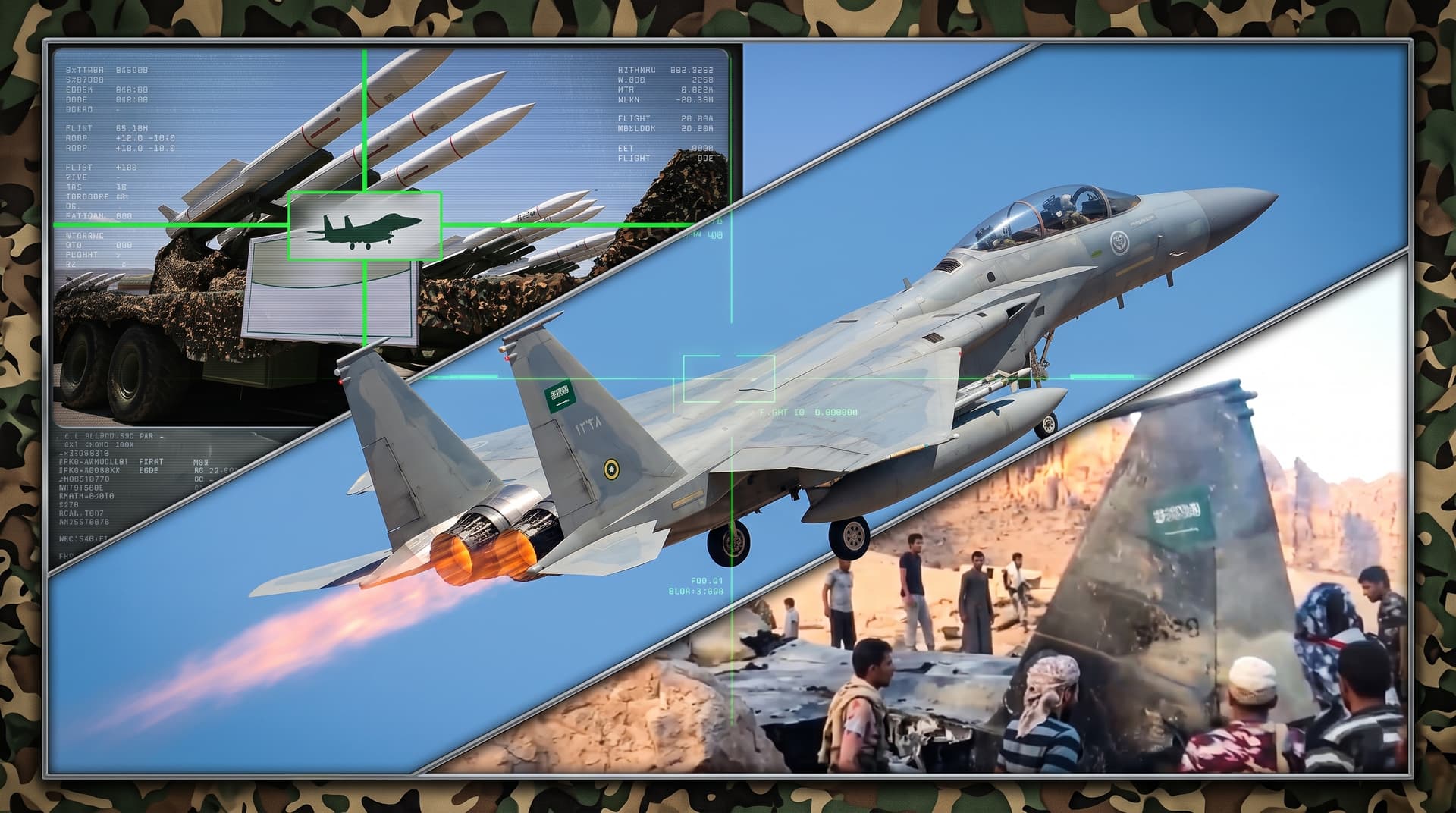
In the high-stakes skies over Marib, Yemen, the traditional rules of air superiority are being violently rewritten. When a Royal Saudi Air Force (RSAF) F-15SA "Advanced Eagle" (Serial #5529 from the 55th Squadron, from King Khalid Air Base in Khamis Mushayt) was brought down, it was more than just the loss of a $120 million airframe. It was a stark, clinical data point exposing the vulnerability of Western 4.5-generation platforms to sophisticated, asymmetric ground threats, and a brutal reminder that technology cannot compensate for a breakdown in tactical discipline.
To understand what happened over Marib, we must look past the geopolitical noise and focus on the forensic reality captured in the ground-based tracking footage. The F-15SA is routinely marketed as a digital fortress. Its survival in contested airspace relies heavily on its BAE Systems ALQ-239 Digital Electronic Warfare Suite (DEWS). But a digital fortress is only as strong as the pilot's ability to manage its sensors. Over Marib, the threat did not come from an active radar lock that would have triggered the aircraft's Radar Warning Receiver (RWR). Instead, the aircraft was stalked by a "silent kill chain."
The tracking footage exhibits a distinct green tint, indicative of advanced thermal processing likely derived from the Iranian "Sadid" electro-optical system. By utilizing passive Infrared (IR) seekers and laser rangefinders, the operators were able to track the F-15SA’s thermal signature without ever emitting a radar pulse. The only warning the pilot received would have come in the terminal phase of the engagement from the AAR-57 Combined Missile Warning System (CMWS), triggered by the heat of the approaching missile's motor.
What followed in the cockpit of that Eagle was a cascade of critical errors, a failure of doctrine that proved fatal. Modern air combat confirms that even the most advanced hardware is secondary to the disciplined application of training. Upon receiving the CMWS alert, the pilot initiated a break but committed the ultimate "thermal suicide": engaging the afterburners. Against an IR-guided seeker, an afterburner exponentially increases the aircraft's infrared signature. Instead of evading the missile, the pilot provided it with an unshakeable, brilliantly hot point-source to track, entirely negating any chance the seeker might lose lock in thermal clutter.
Compounding this error, ground footage confirms the deployment of radar chaff. Chaff is designed to confuse radar-guided systems; it has absolutely zero utility against an IR-guided missile. Dumping chaff while failing to deploy high-intensity thermal flares (Infrared Countermeasures, or IRCM) points to a severe breakdown in situational awareness. It suggests a panic response where the pilot, suffering from cognitive overload, failed to distinguish between a radar threat and an infrared threat.
Had established doctrine been followed, survival was entirely possible. The pilot needed to instantly pull the throttle to idle, eliminating the massive heat source of the engines. Simultaneously, they should have executed a descending, high-G break toward the threat to conserve energy, while pumping out thermal flares to "hand off" the missile's seeker to the decoys.
The mathematics of the footage tell us exactly what kind of weapon capitalized on this mistake. The 24-second flight duration from launch to impact, with an estimated terminal velocity of 700 meters per second, calculates to a mean engagement range of roughly 17 kilometers. This completely rules out shoulder-fired MANPADS like the Igla and Strela or Iranian Majid, which lack the kinetic energy for a 24-second powered flight. While the Soviet-era Saqib-2 (a converted R-27ET) is a candidate, the exceptionally powerful motor sound and high-intensity thermal footprint captured on launch strongly point to a Barq1 or 2series interceptor, a medium-range surface-to-air missile derived from Iranian "Taer" technology.
The loss of Serial #5529 highlights a profound strategic lesson: the "Integration Gap" between capital expenditure and combat proficiency. As former JF-17 thunder fighter pilot Ahsen Niaz noted in his article The Mecca Pact and what Oil Money cannot Buy, no amount of money can purchase the hard-earned tactical discipline required to survive a modern battlespace.
In today's cockpits, the pilot is no longer just a "flyer"; they are a "sensor manager." The failure to correctly interpret life-or-death cockpit alerts under extreme physiological stress demonstrates that acquiring a 4.5-generation fighter is not the same as fielding a multi-domain combat capability. Passive, infrared "silent" kills provide the narrowest window for pilot reaction and remain the apex threat to non-stealth platforms. Until air forces bridge the gap between buying advanced hardware and instilling the ruthless, ingrained doctrine required to operate it, the skies over contested territories like Marib will remain unforgiving.

Former Military Aviator
Sqn Ldr (R) Ali Hamza
Editor-in-chief
Ali Hamza served in PAF for 20 years as a fighter and Instructor pilot, with a stint on helicopters. Choosing academia over commercial flying, he did his double masters in International Relations and Defence & Strategic Studies. Currently an MPhil IR scholar and CEO of AeronautIR Solutions, his research interest lies in espousing aerospace with geopolitics.