Analysis
The Indian Air Force’s Sparta problem
On Indian Air Force Day, the problem worth examining is not fleet size. It is what happens when a numerically superior force is drawn into a space where numbers stop mattering.
Ahsen NiazFormer Fighter Pilot03 Oct 20262 min read
The movie “300” is a fictional movie of a clash between a handful of spartan men and a large Persian army assembled together by Xerxes. The number of Spartan men who set out to battle were so few that they could be considered a rounding error compared to the Persians. The Persians marched towards Sparta expecting to blow away the small group of spartan men and take over Sparta. Leonidas, the king of Sparta however, had other ideas.He lured the Persian army into a narrow pass where the Persians had no room to deploy, and numbers stopped mattering.
Somewhere far away from Sparta someone in PAF watched the movie and cried out loud “This is SPARTA!” as he set off to make the plan. That plan would become “the Indian Air Force's Spartan problem."
Those of us who have followed and analyzed the last two conflicts between the two Air Forces know this plan to be true. The PAF faced a huge problem of facing a numerically superior adversary and came up with the plan (after watching the movie). The idea was simple:the PAF did not need to match the IAF pound for pound along the entire border or conflict area. So what did PAF do? Much like Leonidas they chose their area, a small space where in “limited time” and “limited area” they can create a numerical superiority. This idea was of course expressed by then DCAS (OPS) of PAF on May 9th where he said “The strategy was to have force concentration in our selected AOR”, he goes on to finish the sentence with “and fight at our own strength”. The picture displayed while he was speaking, matched those words exactly.
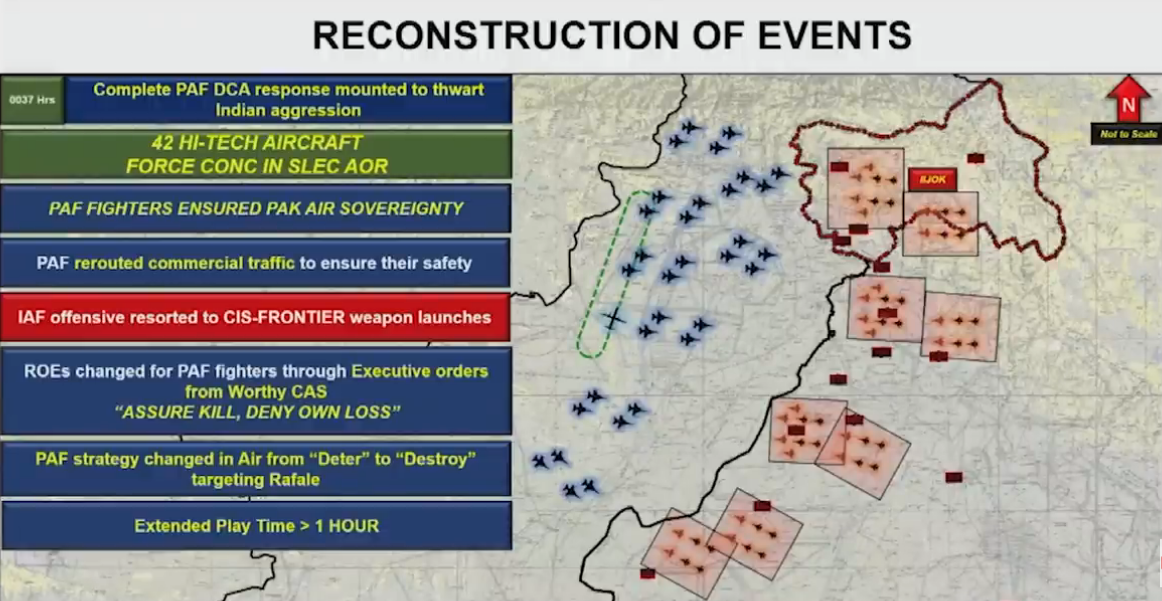
The aerial situation clearly depicts what PAF was trying to do and where the “force concentration” was but most importantly it shows that much like Leonidas, PAF understood its limitations. Rather than defend everything, it chose to fight to its strength in a limited area and for a limited time, causing enough damage in one place to send ripples through the adversary's entire package and force them to back down.
Do the Persians come back and find a way around? Does Leonidas make mistakes? How long does this strategy hold? Those questions deserve their own piece, and they'll get one. This is not IMDB but if it were, I would give the movie five stars.

Former Fighter Pilot
Ahsen Niaz
Writer
Ahsen Niaz flew fighters in the PAF before moving into technology. He writes on airpower employment, regional security, and the gap between published capability figures and operational reality.