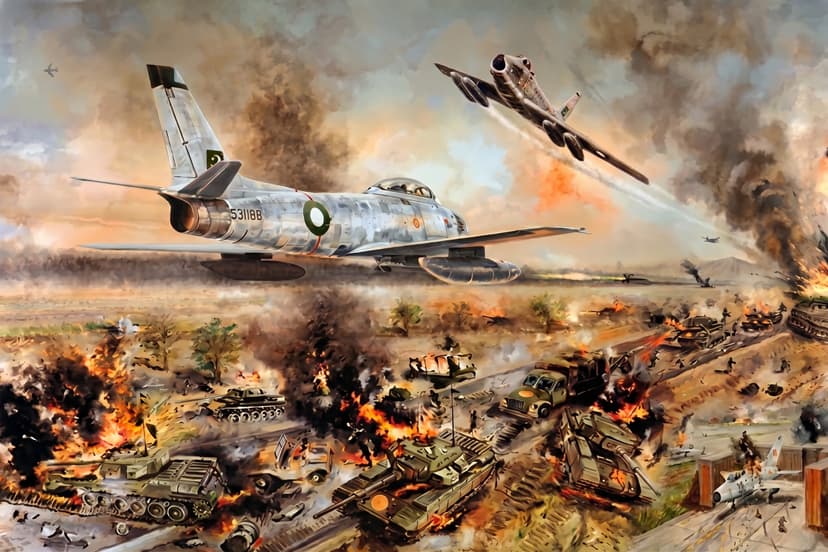
Analysis
Airpower Simplified: Key Takeaways from the PAF vs IAF Standoff of May 2025
Indian media's Op Sindoor propaganda machine is working non-stop since May 2025 for more than a year now. This is a simple take on PAF vs IAF's 8-nil score to put the record straight about Indian losses, including 4 Rafale.
Sqn Ldr (R) Ali HamzaFormer Military Aviator25 Sept 20263 min read
Since the night of 6-7 May 2025, much has been claimed from both India and Pakistan about downing fighters, drones, missiles and hitting targets inside each other’s territory. While we wait for the ‘fog of war’ to clear, some of the aspects of modern aerial warfare have emerged that are beyond anyone’s doubt.
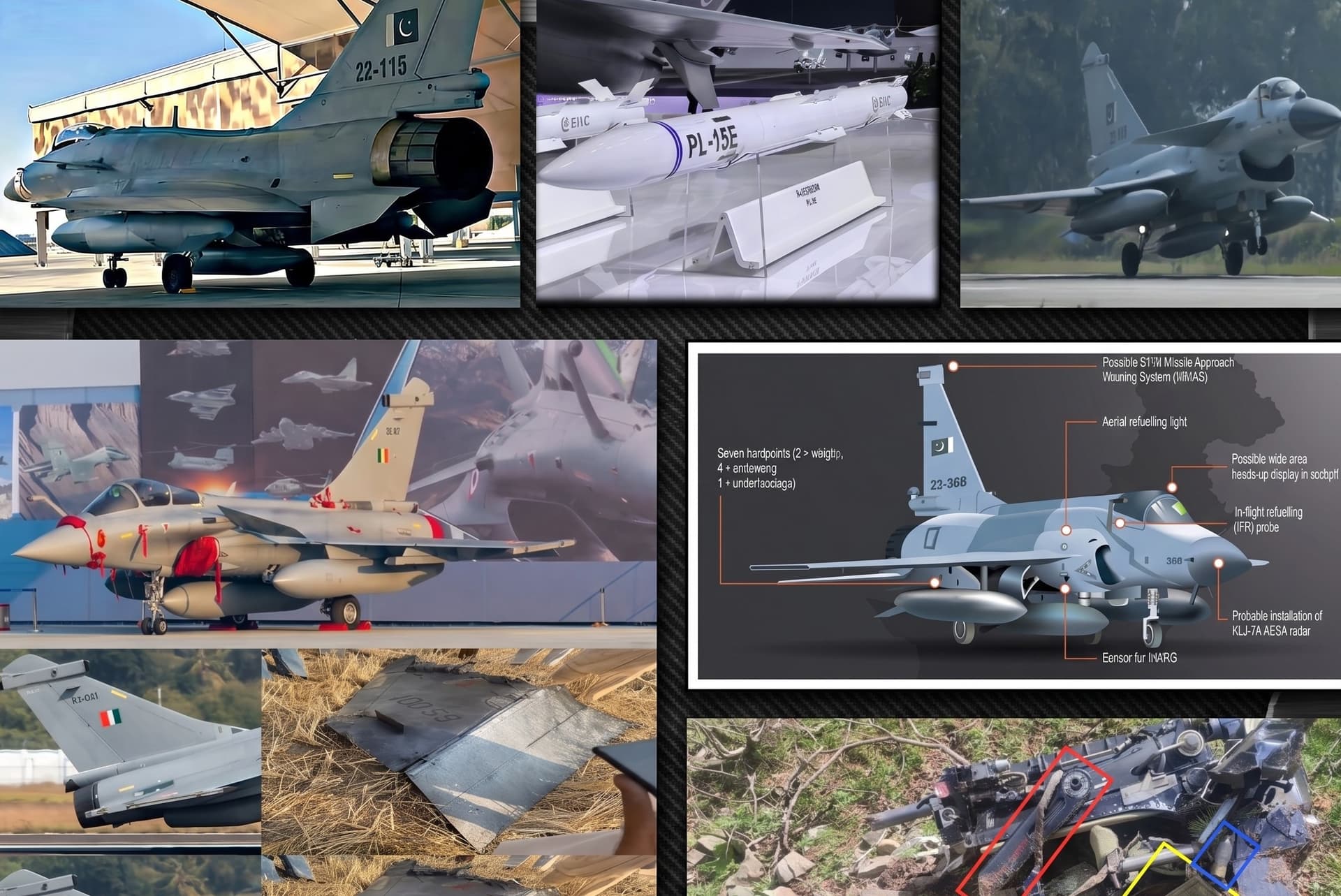
1. Chinese Airpower has Surpassed Russia and quickly closing on to West: May it be J-10C fighter jet, PL-15 BVR missile or HQ-9 Air Defence System’s SAMs (surface to air missiles, Chinese have come a long way in the past two decades. Gone are the days of license manufacturing Russian Mig and Flankers; China has state of art aircraft of her own designs.
2. The King (Rafale) is Dead: There is no question about the fact that out of at least four wreckages of IAF aircraft, one was a French Rafale of Dassault. Though PAF has claimed 3 Rafales out of a total of 6 IAF aircraft destroyed, French and US officials have confirmed loss of 1 IAF Rafale till now. https://asn.flightsafety.org/asndb/type/RFAL
3. JF-17 Thunder’s Targeting of S-400 Radars: A PAF JF-17 block-II of No.14 Squadron successfully targeted S-400 battery at Adampur airfield with Chinese CM-400 AKG air to surface missiles. It is obvious that a couple of hits cannot neutralize a whole battery, yet it is clear that ‘Cheeseboard’ and ‘Gravestone’ engagement and fire control radars were successfully hit and damaged. https://defencesecurityasia.com/en/wheres-the-radar-modis-s-400-photo-op-backfires-amid-pakistani-strike-claims/
4. The new art of war, PAF’s Multi-Domain Ops: As stated by PAF’s Deputy Chief of Air Staff (Operations) or DCAS (O) AVM Aurangzeb, the pride and joy of PAF’s new fighting doctrine is multi-Domain operation, with a lot of focus on Electromagnetic Operations Environment (EMOE). It entails integrating all the assets including fighters, AEW&C aircraft, ground-based radars, space, cyber, AI etc. to form a complete picture of battlespace for complete situational awareness of all the players involved.
5. PAF’s Electronic Warfare capabilities are superior to IAF’s EW: One of the most important features of this conflict, even more than BVR capable AESA fighters, was the exploitation of electromagnetic spectrum. From listening to the RT of all IAF formations, including Spectra EW suite equipped Rafales with call-sign Godzilla, to jamming Indian assets, EW gave the edge to PAF above all.
6. No PAF Aircraft was Lost: Just like in 2019, IAF claimed to shoot down a PAF F-16. Without any doubt, it can be stated that PAF has zero combat losses since 1971. The USA’s count of PAF F-16 is clear proof of this fact, yet Indians disagree on the basis that Americans are lying to save their aircraft’s reputation.
7. Indian Aircraft Carrier is Irrelevant in War: Though an asset of Indian Navy, its Mig-29K of INS Vikrant will be countered by PAF’s fighters in case of a standoff between the two combatants. The small number of these aircraft are barely enough for fleet-defence role in the face of daunting odds posed by PAF’s missiles like CM-400 and C-802 that have replaced Mirage’s Exocet.
8. To conclude, History will remember this Aerial Battle: Never in the history of aerial fighting the world has seen more than 110 aircraft, all from 4-4.5 generation and equipped with BVRs, grinding for more than an hour at midnight. This will be a case study for all aviation experts around the world and is being quoted as a textbook example of long-range aerial engagements. The dogfight may not be dead literally, but it will be extremely rare as evident by this historic airborne fight. The winner of this extraordinary battle was undoubtedly PAF.

Former Military Aviator
Sqn Ldr (R) Ali Hamza
Editor-in-chief
Ali Hamza served in PAF for 20 years as a fighter and Instructor pilot, with a stint on helicopters. Choosing academia over commercial flying, he did his double masters in International Relations and Defence & Strategic Studies. Currently an MPhil IR scholar and CEO of AeronautIR Solutions, his research interest lies in espousing aerospace with geopolitics.