Industry
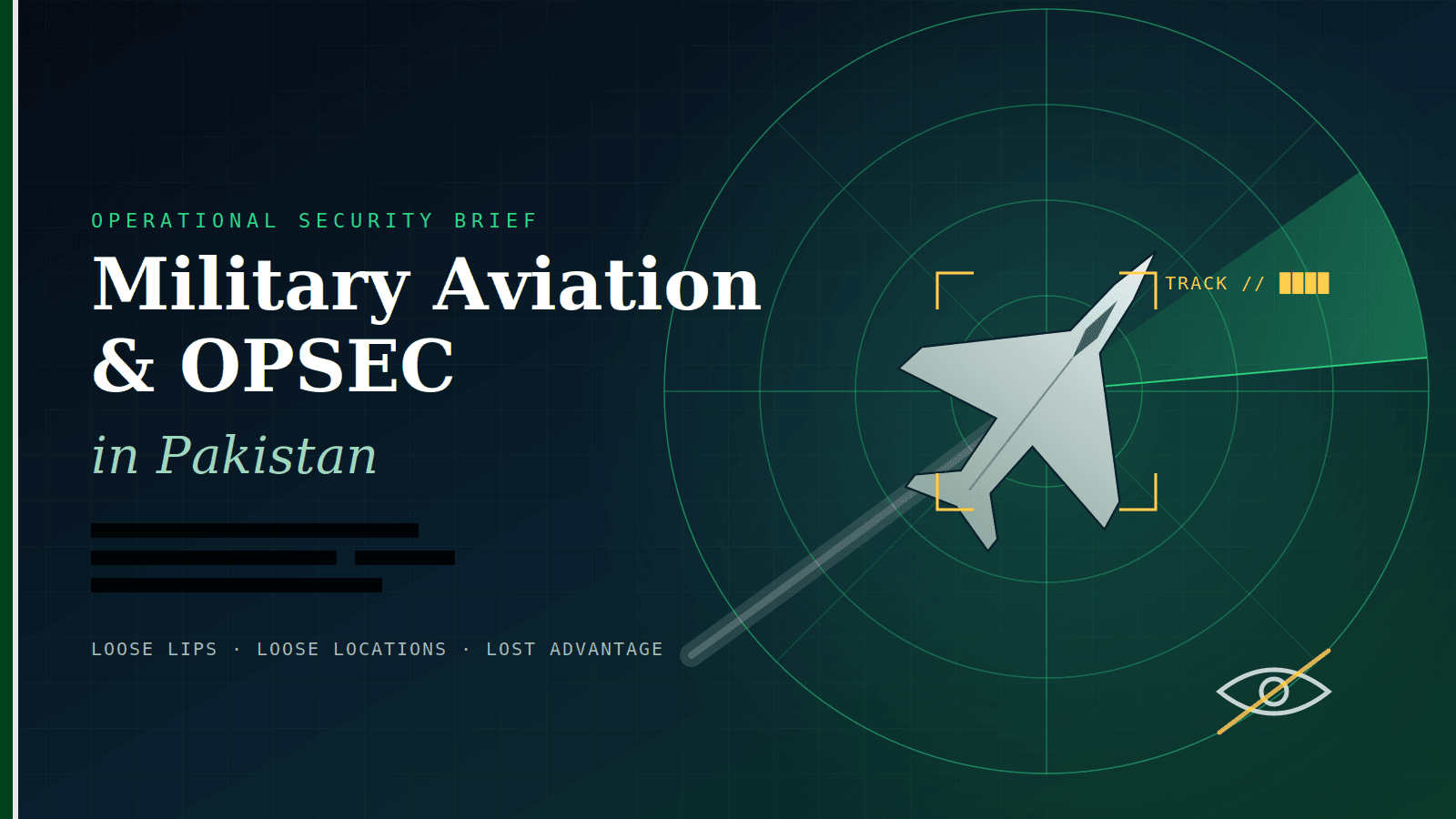
Military Aviation and OPSEC in Pakistan
In Pakistan’s increasingly connected aviation community, a photograph of a military or VIP aircraft can reveal far more than an aircraft itself. This article examines how OPSEC applies to military aviation, why seemingly harmless details can become significant when combined, and where plane spotters, photographers and social-media enthusiasts should draw the line between documenting aviation and unintentionally exposing sensitive information.
Noor Abbas MirzaAviation professional, Strategic business development practitioner08 Oct 20264 min read
Military aviation attracts a large and active following in Pakistan. Pakistan Air Force aircraft, military transports and government or VIP aircraft are regularly photographed and discussed by plane spotters, aviation enthusiasts, journalists and social-media communities.
That interest is legitimate. But the digital environment has changed what an aircraft photograph can reveal. A photograph can be accompanied by a precise location, timestamp, aircraft identity, flight-tracking data or speculation about passengers. Each detail may appear harmless in isolation; together, they can create a much more useful picture than the original observer intended.
This is where Operations Security, or OPSEC, becomes relevant.
OPSEC is not about treating every military aircraft photograph as secret. It is about identifying information that could provide an unauthorized person with useful knowledge about a military or government activity and avoiding unnecessary exposure of it. For aviation enthusiasts, the important distinction is between observing an aircraft and publishing information that exposes sensitive circumstances surrounding its operation.
For military and VIP transport, the aircraft itself may be the least sensitive part of the information. Its movement, timing, location, associations and operational context can carry greater significance. A photograph might identify an aircraft; a caption might establish where it is; another post might identify who is believed to be travelling; and subsequent observations might establish a pattern. The security concern arises from the overall picture.
VIP transport requires particular care because aircraft movements can be associated with senior government officials, military leadership or foreign delegations. There is an obvious difference between documenting an aircraft after an event and providing real-time information that could help establish the whereabouts or movements of a protected person.
The same principle applies to military airfields and other locations associated with defence aviation. Being able to observe an aircraft from a lawful public location does not necessarily mean that every detail of the observation should be published immediately. Real-time reporting, precise locations, expected movements or other contextual information can add considerably more operational value than the photograph itself.
Social media has made this distinction especially important in Pakistan. Aviation pages can reach thousands of people within minutes, while screenshots and reposts can preserve information even after the original post has been deleted. An administrator therefore has to consider the security implications of a post before publication rather than relying on deletion afterwards.
Comments can create additional exposure. A relatively ordinary photograph can become much more informative when users begin identifying locations, discussing passengers, linking the aircraft to other movements or speculating about future activity. Moderation is therefore part of responsible aviation-content management.
Flight-tracking platforms also require judgment. Aviation enthusiasts naturally use publicly available tracking information, but military and government aircraft should not automatically be treated like ordinary commercial traffic. Turning publicly observable information into a real-time monitoring picture can create a very different security risk from simply discussing an aircraft after the fact.
Another important distinction is between information being available online and information being intentionally released for public use. An aircraft database, an old photograph, a social-media post and an aviation forum may each contain public information. Combining them into a detailed movement history can nevertheless create a new and potentially sensitive information product.
This does not mean Pakistani plane spotters should avoid military aviation. Quite the opposite. Aircraft photography, identification, historical research and discussion of officially released information are valuable parts of aviation culture. The objective is to apply reasonable judgment about timing, context and level of detail.
A useful test before publishing is straightforward: could this post, when combined with other information already available online, reveal something about a sensitive movement, schedule, association, capability or activity that was not intended to be public? If so, the responsible choice may be to remove unnecessary details, delay publication or refrain from posting the information altogether.
The same principle applies to photographs. Modern smartphones and cameras can retain metadata, including information about when and sometimes where an image was created. Before uploading military or VIP aviation imagery, photographers should consider whether the file or accompanying post contains unnecessary location or timing information.
OPSEC also means resisting the temptation to turn aviation enthusiasm into competition over who can report a sensitive movement first. Being first on social media is not necessarily a mark of good aviation journalism. In some circumstances, restraint is the more professional choice.
For Pakistan's aviation community, the goal should be a sensible balance between public interest and security. Military aviation can be photographed, researched and appreciated without unnecessarily exposing operational information. Enthusiasts can contribute to aviation history without becoming an inadvertent source of real-time intelligence.
The modern plane spotter is also a publisher. That carries a responsibility. Knowing what can be observed is one skill; knowing what should be shared, when it should be shared and how much context is appropriate is another.
Responsible OPSEC does not diminish military aviation enthusiasm. It makes the community more professional, informed and trustworthy.
Aviation professional, Strategic business development practitioner
Noor Abbas Mirza
Writer
Aviation professional, strategic business development practitioner with experience spanning Aerospace & Defense Procurement, AVSEC, INFOSEC, CyberSEC, Quality, Compliance & Due Diligence Management